Summary
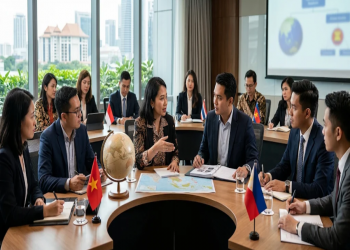
The Bilateral Relations and Foreign Policy Management Training Course delivered by Geneva Institute of Business Management provides a comprehensive strategic framework for high-level decision-makers, diplomats, and international business leaders navigating state-to-state relations. In an increasingly interconnected global market, sound foreign policy management serves as the cornerstone of stable diplomatic relations, international trade security, and effective cross-border cooperation. Organisations and governmental entities operating across borders require advanced expertise in bilateral diplomacy to protect national and corporate interests while driving global partnerships.
Offered under the category Diplomacy and International Relations, this masterclass equips participants with actionable strategies to handle complex bilateral negotiations, diplomatic protocol, international conflict resolution, and geopolitical risk analysis. Geneva Institute of Business Management delivers a rigorous curriculum designed by seasoned international strategy experts, combining theoretical mastery with practical executive skill sets. Through real-world case evaluations and scenario-based executive simulations, professionals gain the analytical tools required to manage multi-tiered bilateral engagements, construct resilient foreign policy frameworks, and drive sustained strategic influence on the global stage.
Objectives
Participants in the Bilateral Relations and Foreign Policy Management Training Course at Geneva Institute of Business Management gain core executive competencies tailored to high-stakes international engagements. Upon completion of this program, executives achieve the following strategic outcomes:
Strategic Foreign Policy Alignment
Develop robust, future-ready foreign policy management protocols aligned with national interests and cross-border commercial agendas.
Mastery of Bilateral Diplomacy
Execute high-impact state-to-state relations, leveraging proven diplomatic tactics to establish, maintain, and expand formal partnerships.
Advanced Bilateral Negotiations
Lead complex bilateral negotiations with confidence, using structured framework analysis to achieve favourable outcomes in international agreements, bilateral treaties, and trade partnerships.
Geopolitical Risk Management
Identify, evaluate, and mitigate political, economic, and security risks inherent in changing global diplomatic relations.
Cross-Cultural Strategic Communication
Harness advanced communication and diplomatic protocol strategies to negotiate sensitive bilateral issues across diverse political systems and cultural environments.
Target Audience
The Bilateral Relations and Foreign Policy Management Training Course at Geneva Institute of Business Management is structured for senior leaders and policy architects tasked with steering international strategy, governance, and diplomatic engagements.
Primary Participant Profiles
Government Officials and Career Diplomats
Ambassadors, foreign service officers, and ministry officials responsible for implementing foreign policy management agendas and maintaining state-to-state relations.
International Business Executives
Chief Executive Officers, Chief Operating Officers, and Directors of Government Affairs managing cross-border commercial operations and regulatory compliance.
Policy Analysts and Strategy Advisors
Senior advisors in think tanks, political consulting firms, and non-governmental organisations involved in bilateral diplomacy and international strategy design.
Defence and Intelligence Professionals
Senior officers analysing geopolitical risk, international trade security, and military diplomacy in strategic state-to-state relations.
Modules
Module 1 Foundations of Bilateral Relations and Global Governance
-
Evolution of bilateral diplomacy in modern international order
-
Core principles of state-to-state relations and sovereign interaction
-
Aligning foreign policy management with broader economic and security goals
-
Comparative analysis of multilateral versus bilateral diplomatic frameworks
-
Institutional structures governing global diplomatic relations
Module 2: Foreign Policy Formulation and Execution Strategies
-
Analytical methodologies for designing proactive foreign policy frameworks
-
Integrating national interest with international legal standards
-
Assessing geopolitical shifts and their influence on bilateral relations
-
Institutional decision-making models in foreign ministry administration
-
Measuring the efficacy and economic impact of foreign policy initiatives
Module 3: Strategic Bilateral Negotiations and Treaty Drafting
-
Advanced mechanics of multi-phase bilateral negotiations
-
Structuring international trade agreements and bilateral investment treaties
-
Coalition building and power dynamics in state-to-state negotiations
-
Overcoming deadlocks and managing impasse in high-stakes negotiations
-
Legal mechanics of bilateral agreements and compliance monitoring
Module 4: Diplomatic Protocol, Communication, and Influence
-
Standard international diplomatic protocol and ceremonial standards
-
Crisis communication strategies in sensitive bilateral diplomatic scenarios
-
Strategic messaging and public diplomacy in state-to-state interactions
-
Managing high-level bilateral summits and ministerial delegations
-
Leveraged influence techniques in cross-cultural diplomacy
Module 5: Geopolitical Risk Assessment and Crisis Management
-
Identifying emerging operational, political, and regulatory risks in foreign markets
-
Developing crisis response protocols for sudden shifts in bilateral relations
-
The impact of economic sanctions and trade barriers on foreign policy management
-
Intelligence integration for strategic decision-making in bilateral diplomacy
-
Building resilient bilateral relations during times of global political instability
FAQs
Q 1: What is the primary focus of the Bilateral Relations and Foreign Policy Management Training Course?
The program focuses on equipping leaders with advanced skills in bilateral diplomacy, state-to-state relations, strategic foreign policy management, and bilateral negotiations within the category of Diplomacy and International Relations.
Q 2: Who should attend this training program at Geneva Institute of Business Management?
This course is designed for government leaders, career diplomats, foreign service personnel, international corporate executives, policy advisors, and defence professionals who manage cross-border relations or international strategy.
Q 3: How does this course enhance practical negotiation skills in international contexts?
The curriculum includes structured modules on bilateral negotiations, covering multi-phase negotiation tactics, treaty drafting, deadlock resolution, and scenario-based simulations that reflect real-world diplomatic challenges.
Q 4: Does the curriculum address geopolitical risk analysis for corporate decision-making?
Yes, the course includes dedicated training on geopolitical risk assessment, evaluating how changes in state-to-state relations, economic sanctions, and foreign policy shifts impact international business stability.
Q 5: What organisation awards the certificate upon course completion?
Participants who successfully fulfil all program requirements receive an official professional certificate issued directly by Geneva Institute of Business Management.
Venues and dates
This programme runs every month in the following cities. Select a venue to register.
 Geneva
Switzerland
 Zurich
Switzerland
Basel
Switzerland
 London
UK
 Manchester
UK
 Oxford
UK
 Madrid
Spain
 Barcelona
Spain
 Paris
France
 Rome
Italy
 Vienna
Austria
Oslo
Norway
 Athens
Greece
 Copenhagen
Denmark
 Berlin
Germany
 Munich
Germany
 New York
USA
 Washington
USA
 Dubai
UAE
 Istanbul
Turkey
 Amsterdam
Netherlands
 Brussels
Belgium
 Lisbon
Portugal
 Malaga
Spain
 Milan
Italy
 Dusseldorf
Germany
 Prague
Czech Republic
 Budapest
Hungary
 Stockholm
Sweden
 Sheffield
UK
 Bangor
UK
 Ankara
Turkey
 Abu Dhabi
UAE
 Doha
Qatar
 Riyadh
Saudi Arabia
 Jeddah
Saudi Arabia
 Dammam
Saudi Arabia
 Muscat
Oman
 Amman
Jordan
 Cairo
Egypt
 Sharm El Sheikh
Egypt
 Casablanca
Morocco
 Marrakesh
Morocco
 Agadir
Morocco
 Tangier
Morocco
 Tunis
Tunisia
 Kuala Lumpur
Malaysia
 Singapore
 Jakarta
Indonesia
 Phuket
Thailand
 Tokyo
Japan
 Beijing
China
 Los Angeles
USA
 California
USA
 Toronto
Canada